thumb.png)
Overview
As a product designer, I focused on reducing entry barriers and building trust for global travelers visiting Korea, especially women travelers from the MENA region, when booking beauty and wellness services.
Through research, I found that structural constraints such as the requirement for a Korean phone number prevent many international travelers from even accessing local platforms. On top of this, uncertainty around cultural trust and privacy made it difficult for MENA women travelers to move from interest to actual booking.
To address this, I designed a low-friction onboarding experience with email-based sign-up, along with a UX strategy centered on culturally relevant information and trust-building mechanisms that help users confidently complete their reservations.
overview2.png)
overview.png)
Problem Framing
1. Context
In 2024, women travelers from the Middle East and North Africa (MENA) increased by 22% year over year, becoming one of the fastest-growing segments in Korea’s tourism market.
While interest in K-beauty and wellness services was high, actual booking conversion remained low.
context.png)
2. Problem
Research showed that this drop-off was caused by multiple overlapping issues.
First, platform-level constraints in Korea limited access for international users. Many services still required local phone number verification, preventing travelers without a Korean number from signing up.
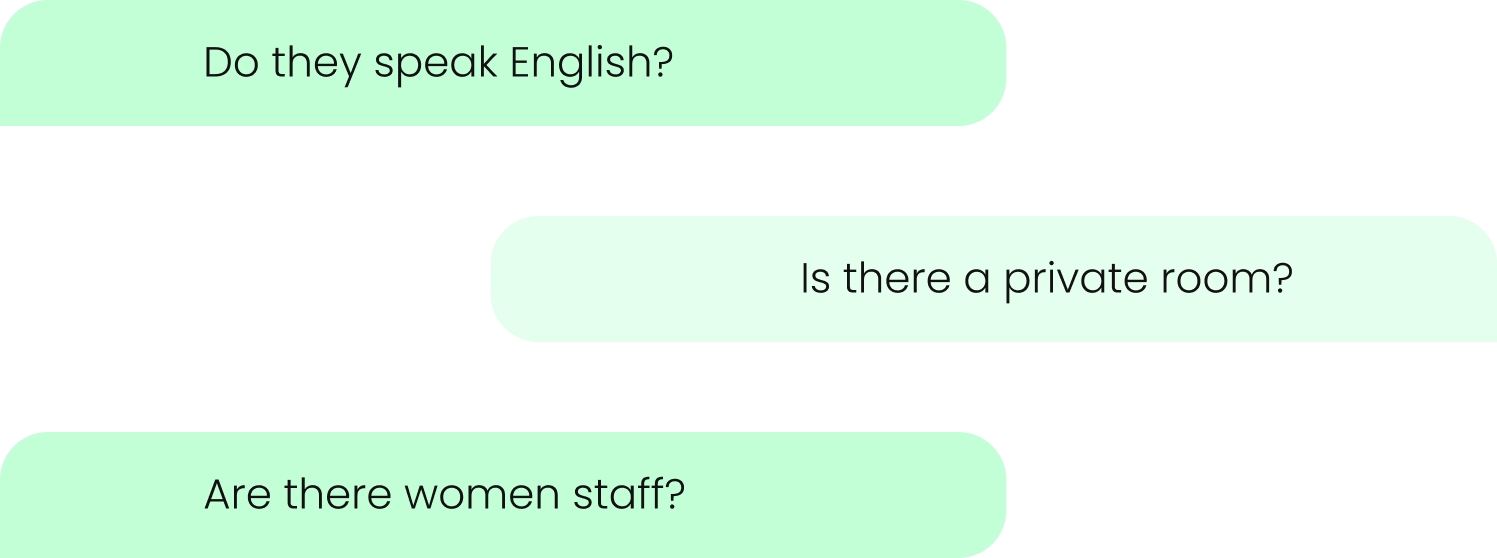
Second, these structural barriers were compounded by cultural concerns that disproportionately affected MENA women travelers. Users could not easily verify whether services offered private rooms, female staff, or adequate privacy protection, nor could they assess whether providers were culturally trustworthy.
uxflow.png)
3. Experience Gap
As a result, users repeatedly searched for basic information such as location or pricing, relied on TikTok or word of mouth instead of platforms, and failed to progress to the booking stage.
This was not simply an information gap, but a lack of UX structures that could support trust and confident decision-making.
gap1.png)
Research & Validation
After defining the problem, I conducted both quantitative and qualitative research to validate whether these issues consistently appeared in real user experiences.
1. Quantitative Research(n = 120, Muslim women)
Most respondents reported difficulty finding culturally trustworthy information on existing platforms, which directly contributed to low booking confidence despite high interest.
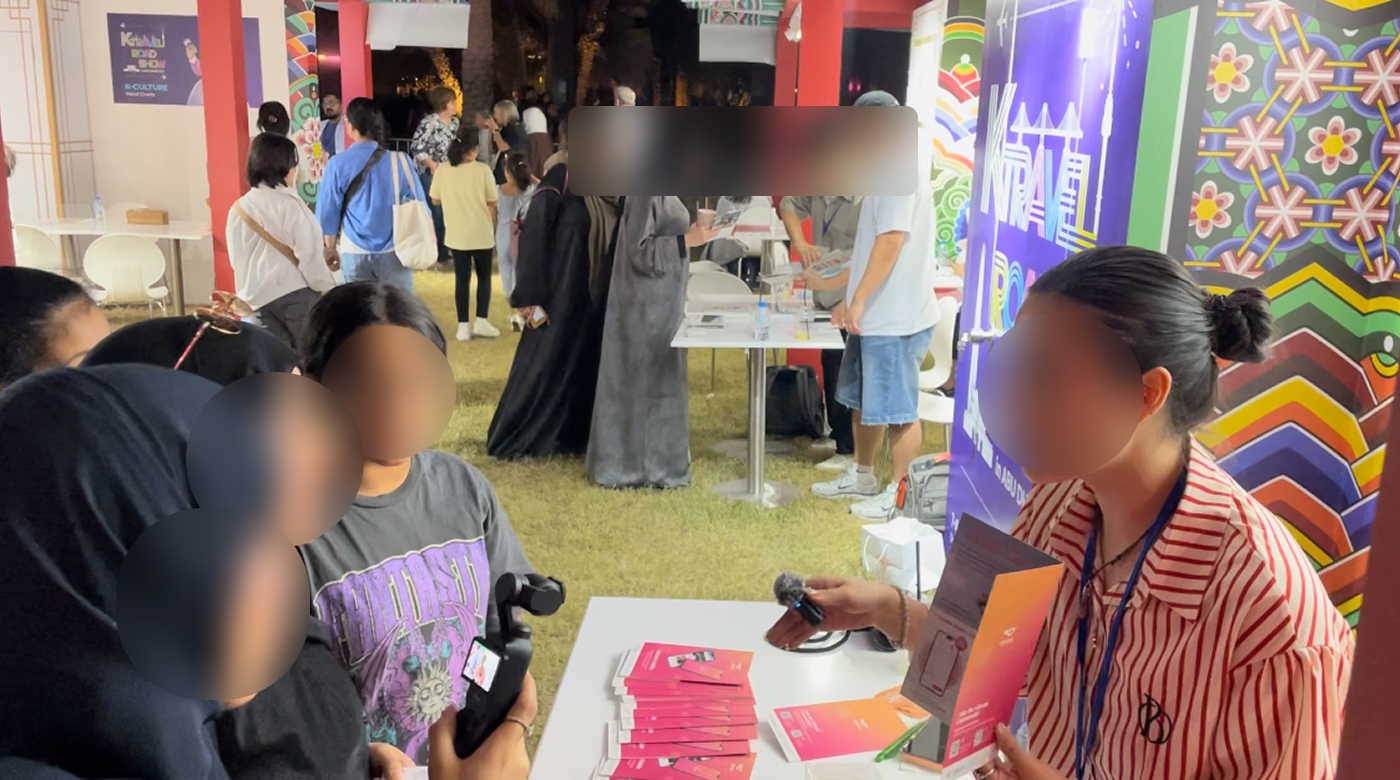
2. Abu Dhabi Tourism Roadshow Interviews
In short conversations with travelers, users repeatedly mentioned concerns such as “not knowing what feels safe” and “not being able to tell if a service is women-only.”
Many also relied more on TikTok and personal recommendations than booking platforms..
3. Pre-launch User Pool
Through online surveys and offline networking, we built an initial pool of 140 users to support future usability testing and validation after launch.
insight3.png)
Key Insight: Gaps in cultural context, privacy assurance, and trustworthy information are the main reasons why highly interested MENA users hesitate to move from discovery to actual booking.
Defining the Opportunity
Key UX Challenges
We identified four major frictions that prevent MENA travelers from confidently booking beauty & wellness services in Korea:
• Local number requirement: evidenced by 83% survey drop-off at signup
• Lack of cultural filters: backed by TikTok/IG comments
• Low provider trust: Users find it hard to assess trustworthiness
Product Opportunity Areas
These challenges directly shaped four key product pillars:
• Frictionless Onboarding: No KR phone required; users can join with email or social login
• Culturally Aware Discovery: Filters for private rooms, women-only staff, and privacy-focused needs
• Verified Provider System: Trusted badges and culturally considerate information
Solution Framework
User flow Architecture
I mapped end-to-end flows for Travelers, Providers, and Admins to identify friction points around onboarding, discovery, verification, and booking.
framework2.png)
This high-level flow reflects how research insights were translated into a clear, end-to-end booking experience.
MVP Scope Decisions
MVP Priority
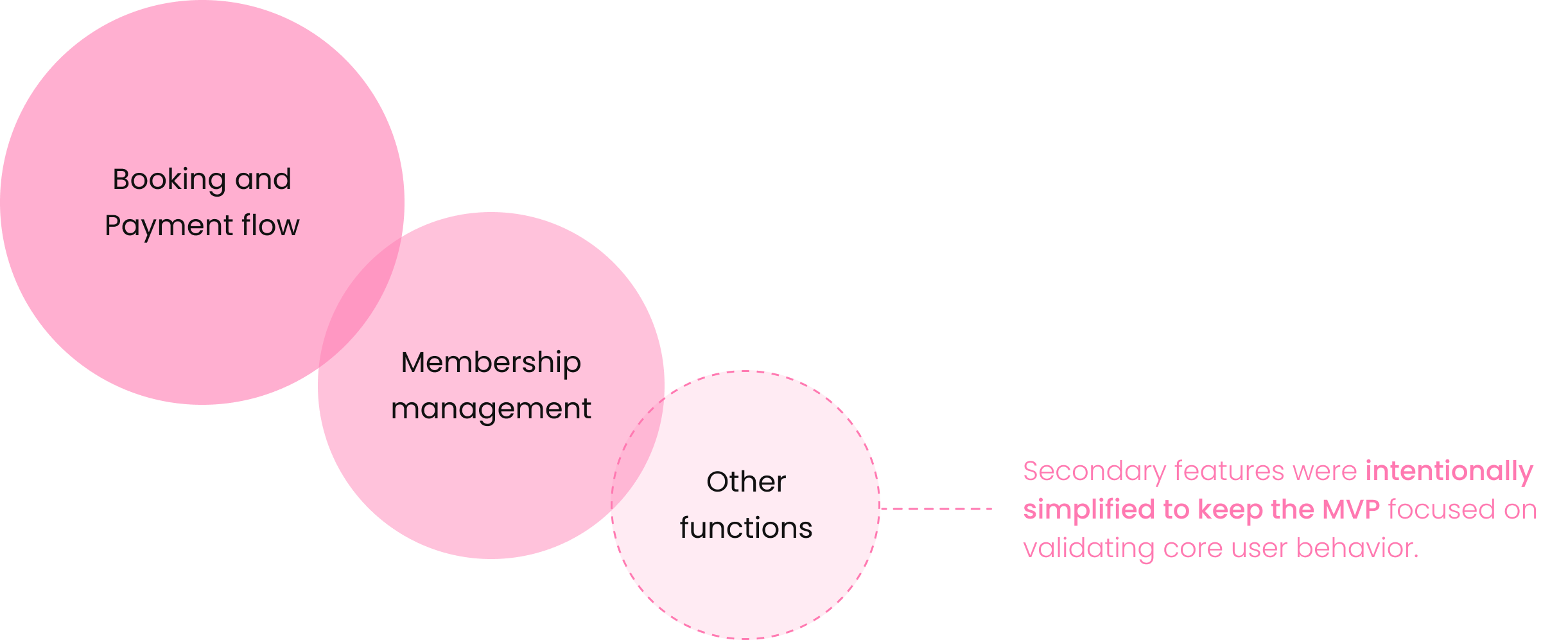
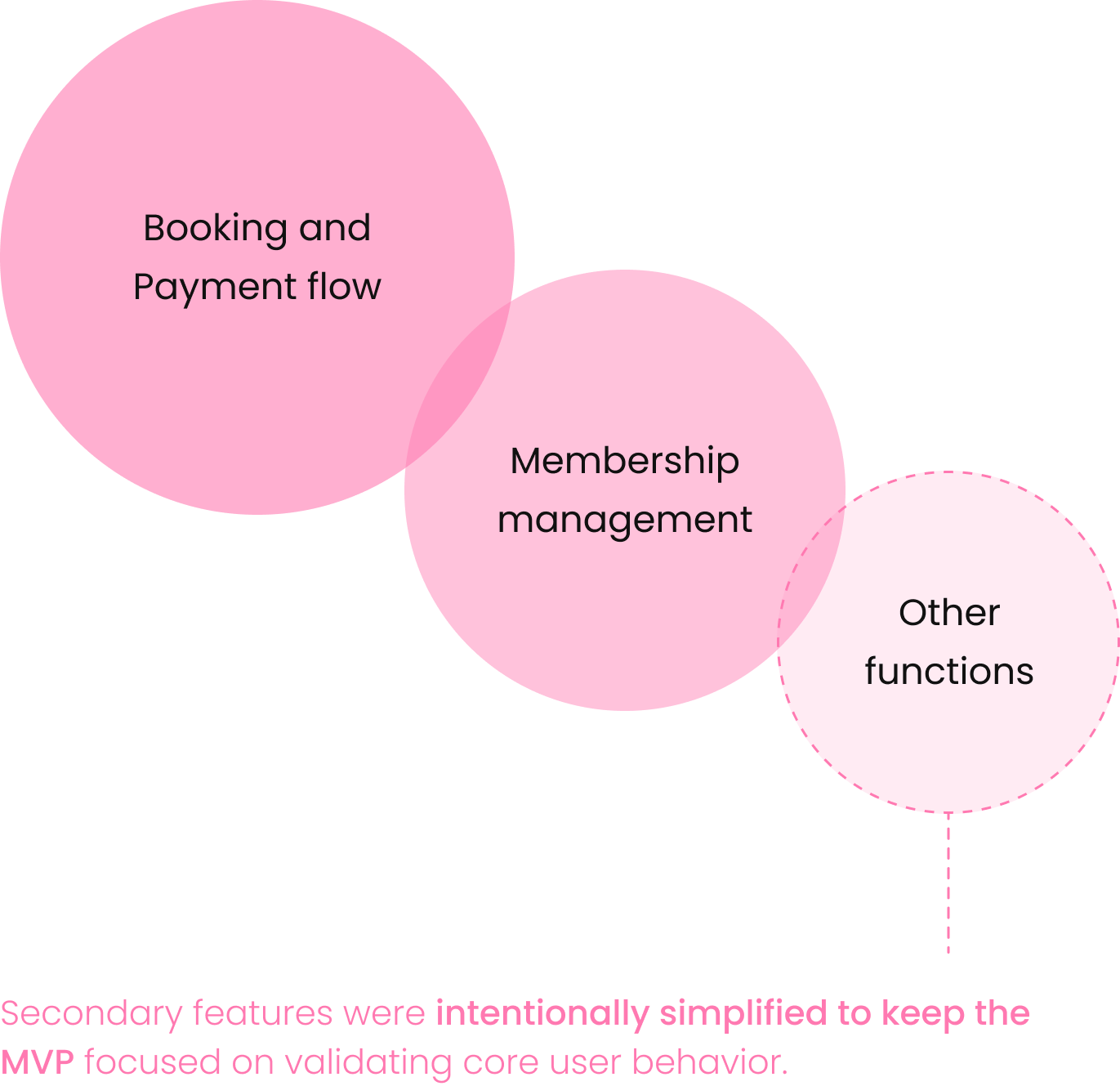
The primary goal of this MVP was to validate the core booking and payment flow for both users and store operators.
mvp1.png)
Original Concept
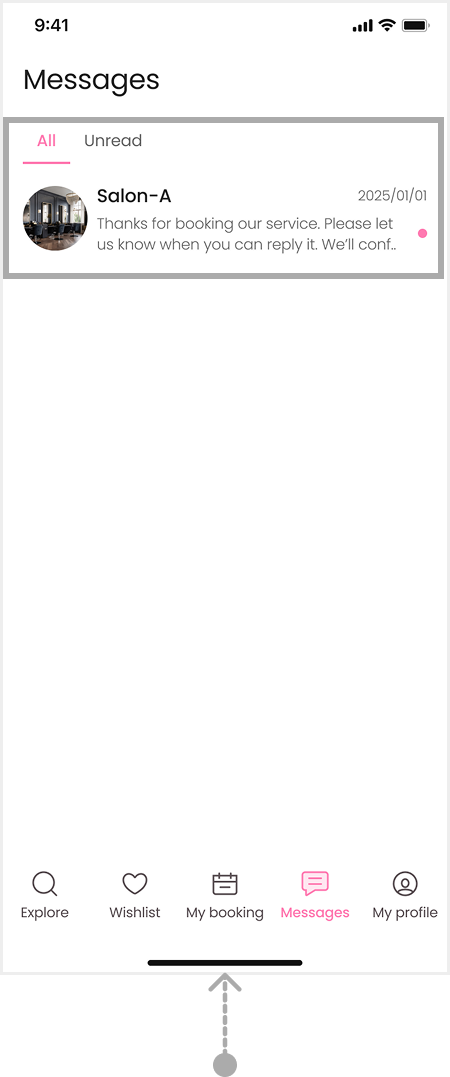

Original idea
→ In-app direct chat
MVP Implementation
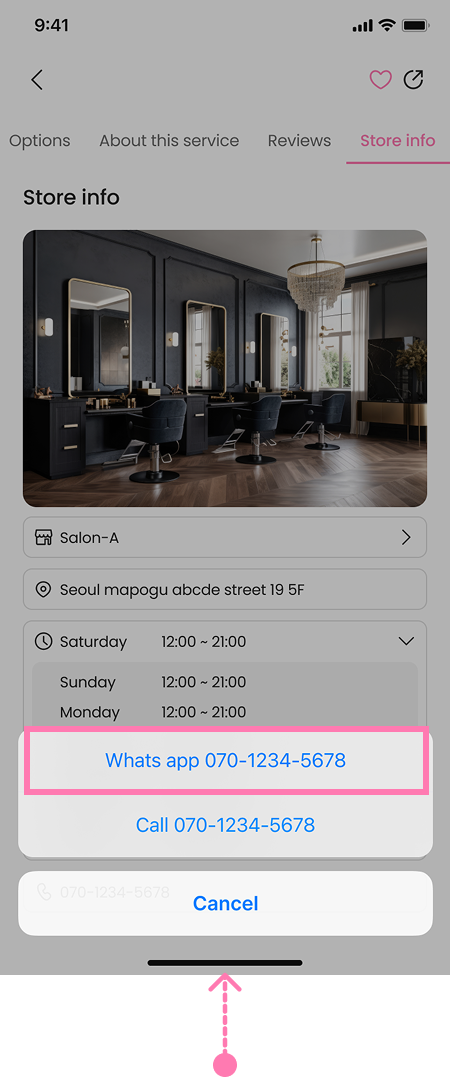
mvp-icon2.png)
MVP decision
→ WhatsApp deep link
mvp-icon3.png)
Reason
→ Support the booking flow with minimal communication overhead.
mvp2.png)
Original Concept
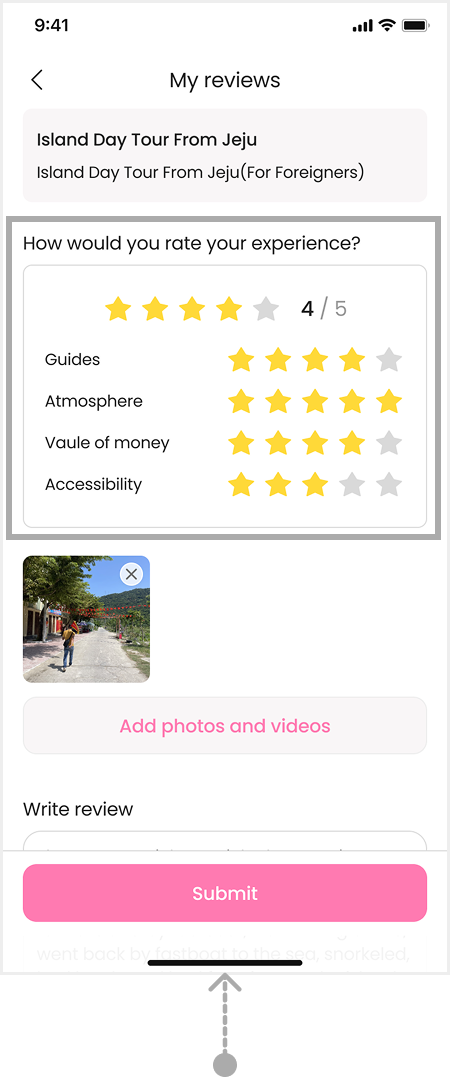
Original idea
→ Service-specific rating criteria
MVP Implementation
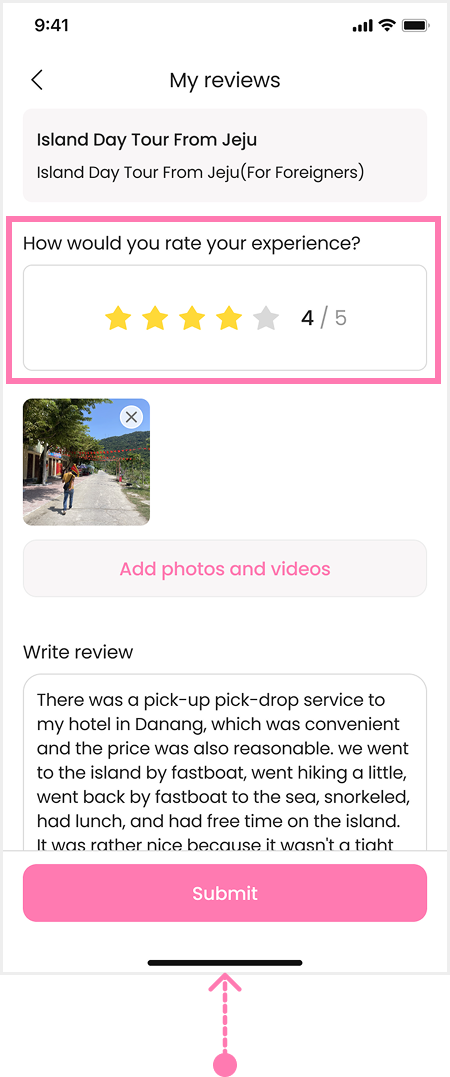
MVP decision
→ Single satisfaction score + review
Reason
→ Validate overall service satisfaction before introducing detailed criteria.
Original idea
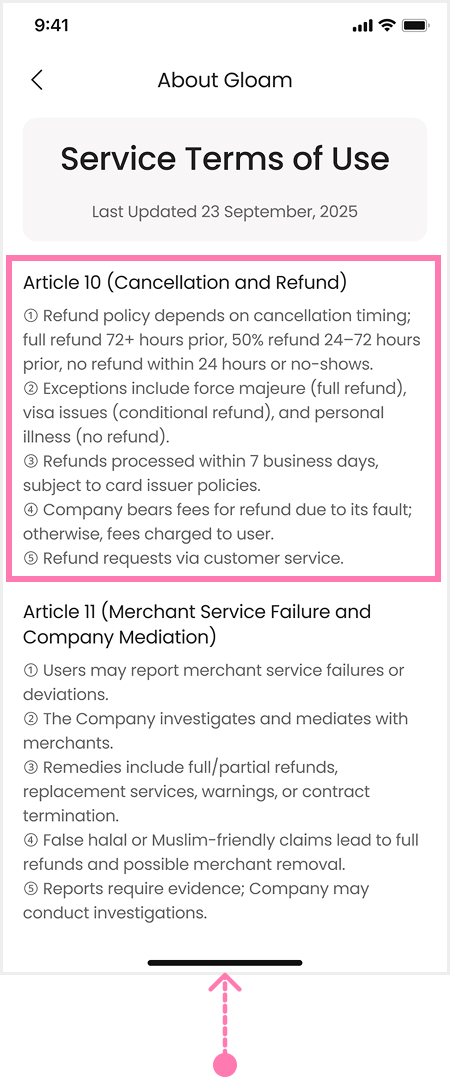
→ Store-specific refund policies
MVP Implementation
MVP decision
→ Unified refund logic
Reason
→ Minimize operational risk and edge cases in early stage.
These decisions were made in close collaboration with engineering
Brand Identity
Visual Tone & Trust Signals
Within the boundaries of usability and trust, I established a visual tone that feels familiar, refined, and appropriate for a beauty platform.
The logo and color system were used as supportive signals that reinforce consistency and brand identity without interrupting core UX flows.
identity.png)
Design system
Interaction Consistency
Given the importance of trust and privacy, providing a predictable and consistent interface was a key design requirement.
To achieve this, I standardized commonly fragmented patterns such as inputs, buttons, and filters into a component-based design system.
This allowed users to quickly learn interaction patterns across screens and experience a clean, cohesive interface throughout the product.
design-sysyem.png)

more.png)
The attached video demonstrates how these components were applied consistently in real design workflows, helping reduce maintenance costs and enabling future expansion into categories beyond beauty while maintaining brand coherence.
Solution
1. Lowering Entry Barriers for Global Travelers
The requirement for a Korean phone number was the largest structural barrier for international users.
To address this, I introduced email and social-based sign-up and designed an onboarding flow that requires minimal verification before booking.
uxflow1.png)
uxflow1-1.png)
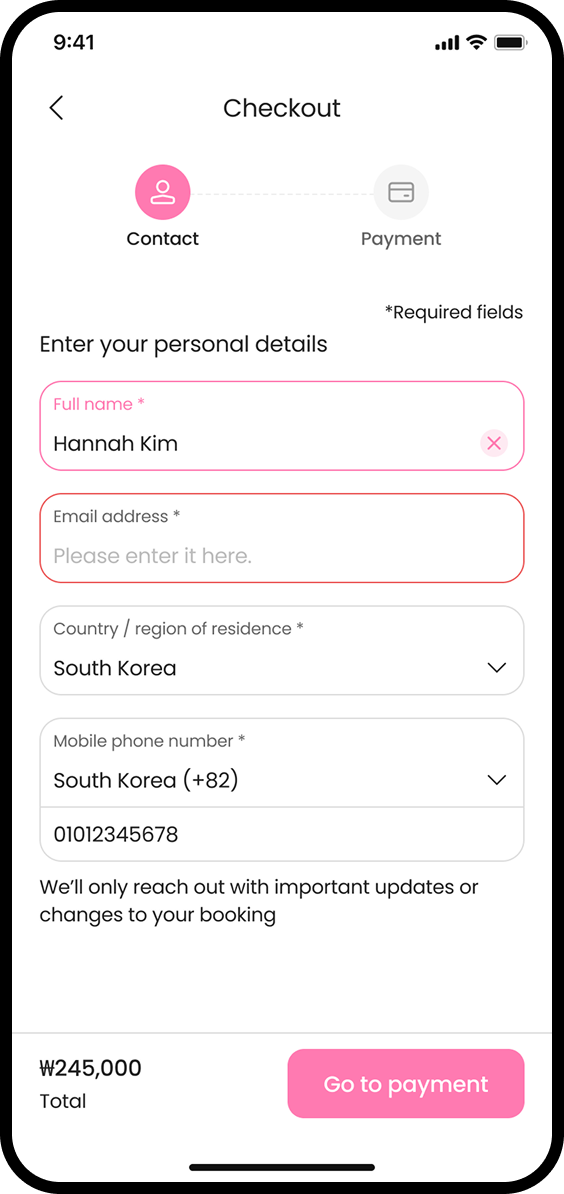
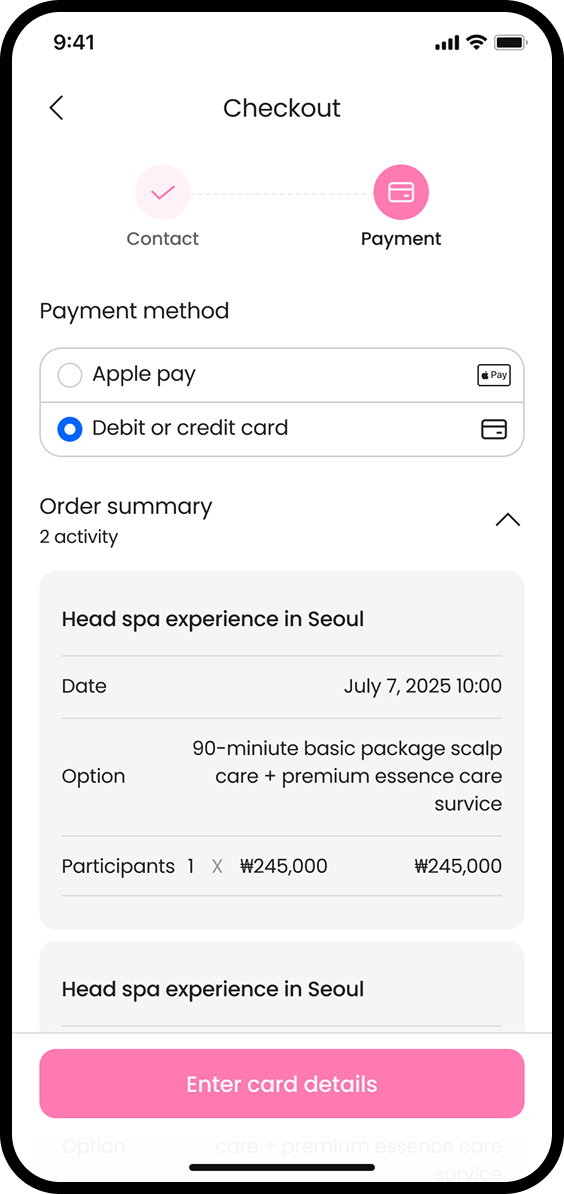
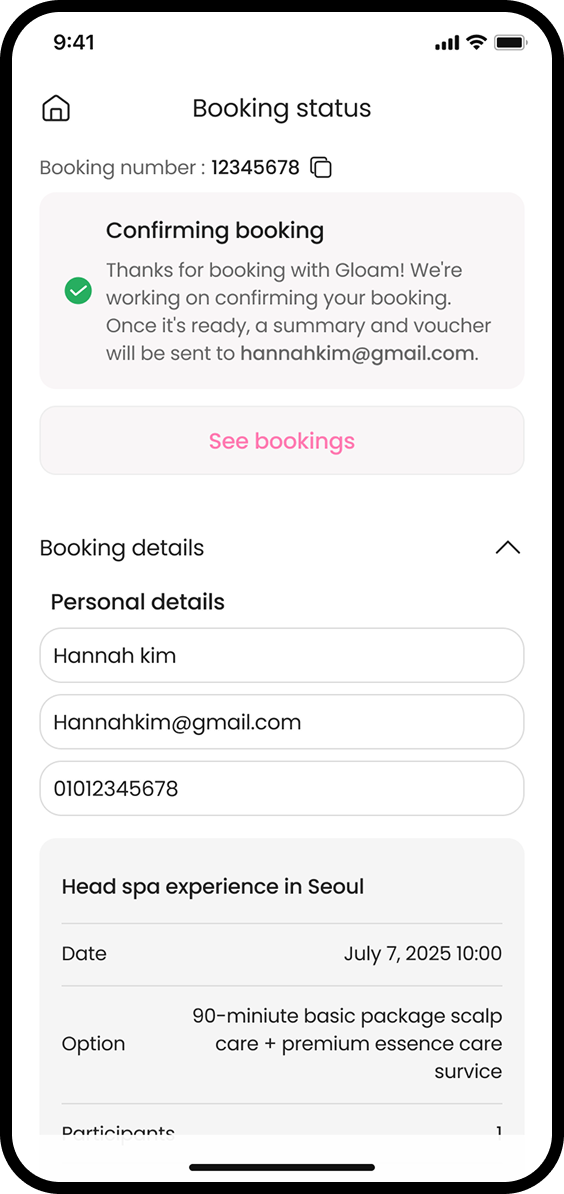
This approach was carried through the entire booking and payment flow.
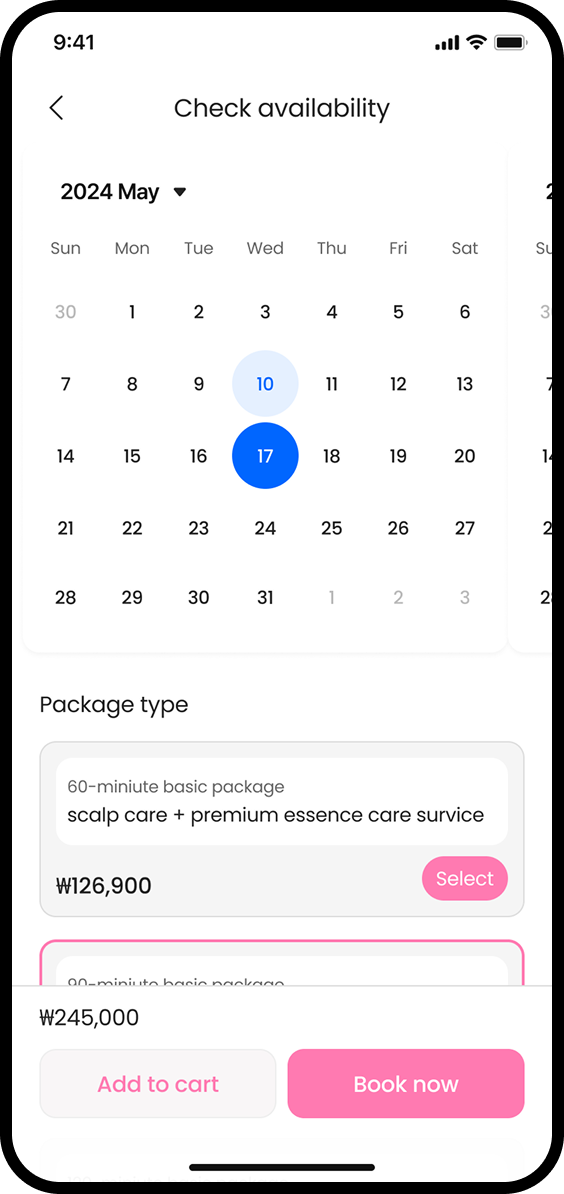
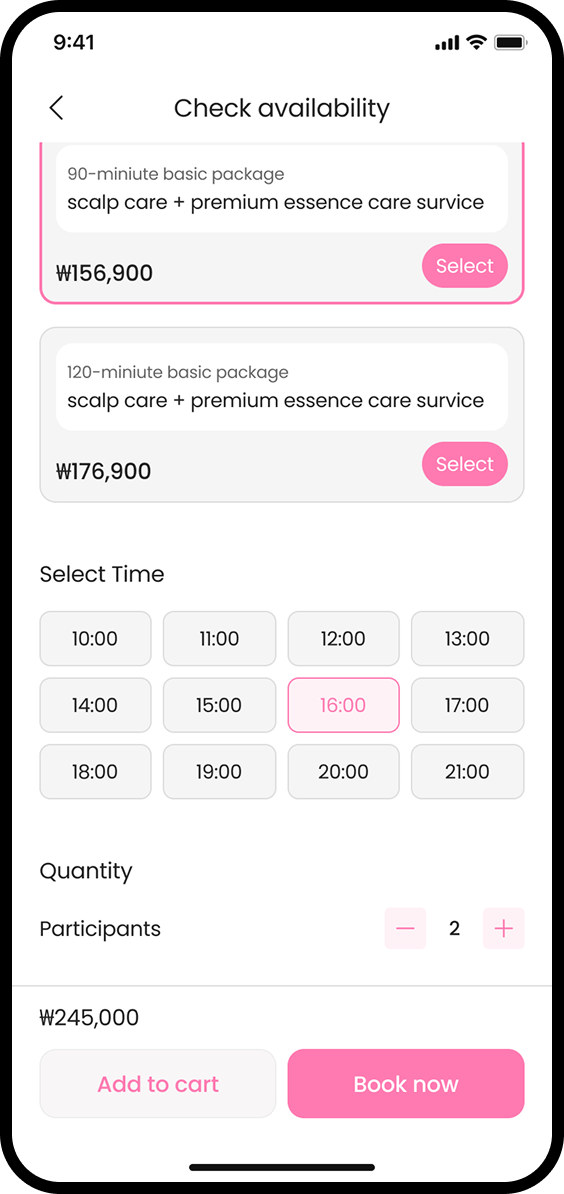
The order summary and payment process were intentionally simplified to reduce cognitive load and friction, allowing users to complete reservations without unnecessary steps or local credentials.
A simplified order and payment flow designed to minimize friction for first-time global users.
2. Designing for Cultural Safety and Privacy
For MENA women travelers, privacy-related factors (such as private rooms, female staff, and overall discretion) were critical booking criteria.
Instead of treating these as secondary details, I placed them at the center of search and discovery.
uxflow2.png)
Culturally relevant filters and clear information structures helped reduce uncertainty and supported confident decision-making.
3. Building Trust Through Curation and Verification
Users often hesitated because they lacked reliable ways to assess provider credibility.
Rather than presenting an unfiltered list, I designed a curated experience supported by provider verification.

uxflow3-1.png)
4. Verified Reviews from Similar Travelers
Instead of relying on generic ratings, I designed a review system that highlights verified feedback from travelers with similar cultural backgrounds.
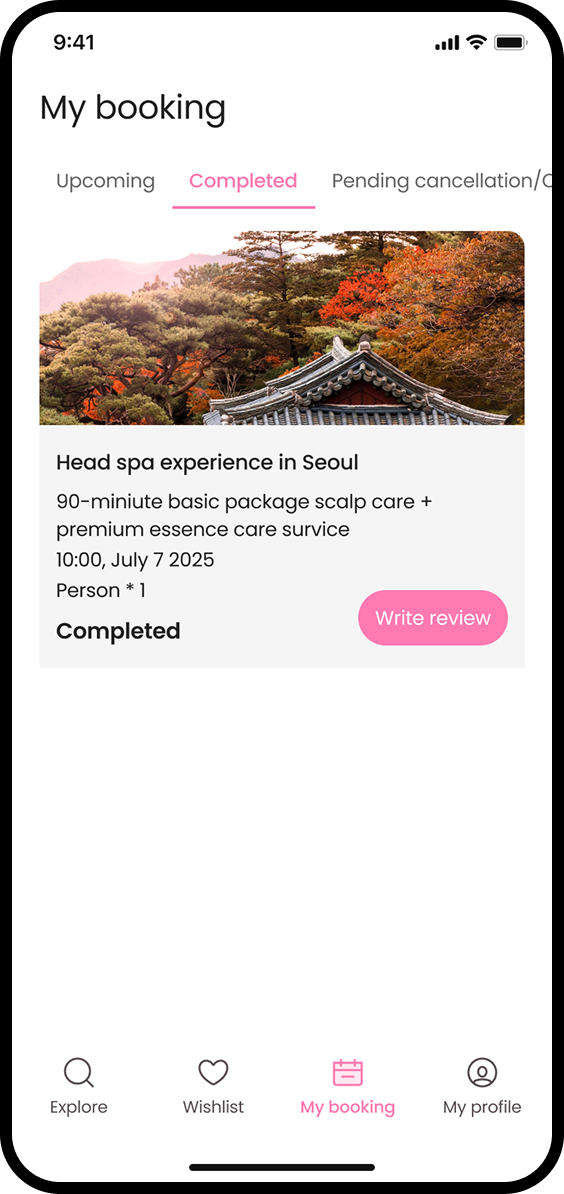
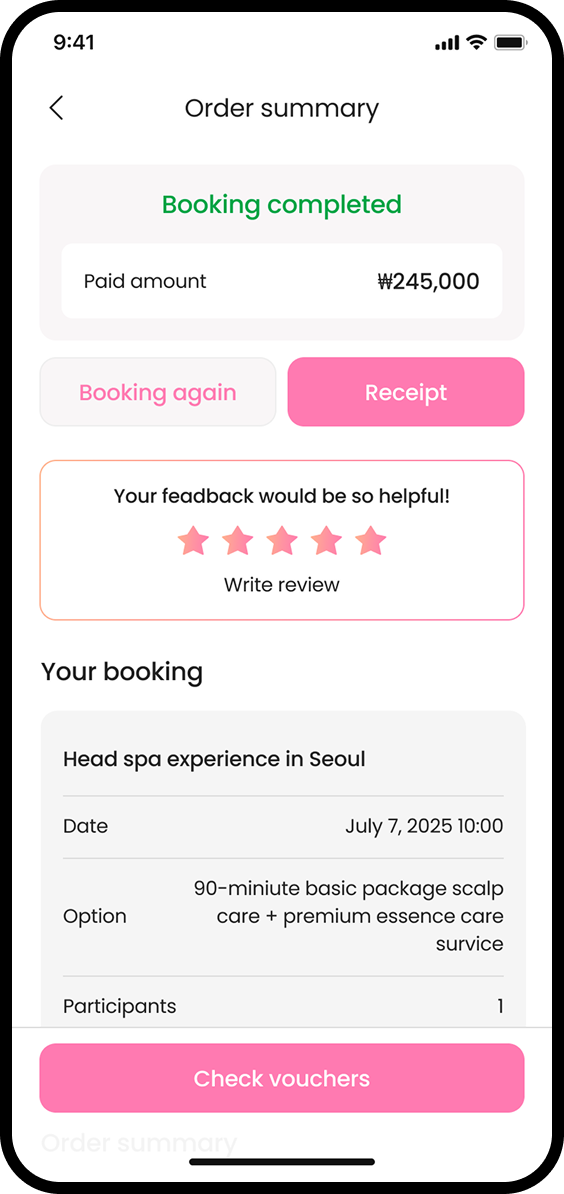
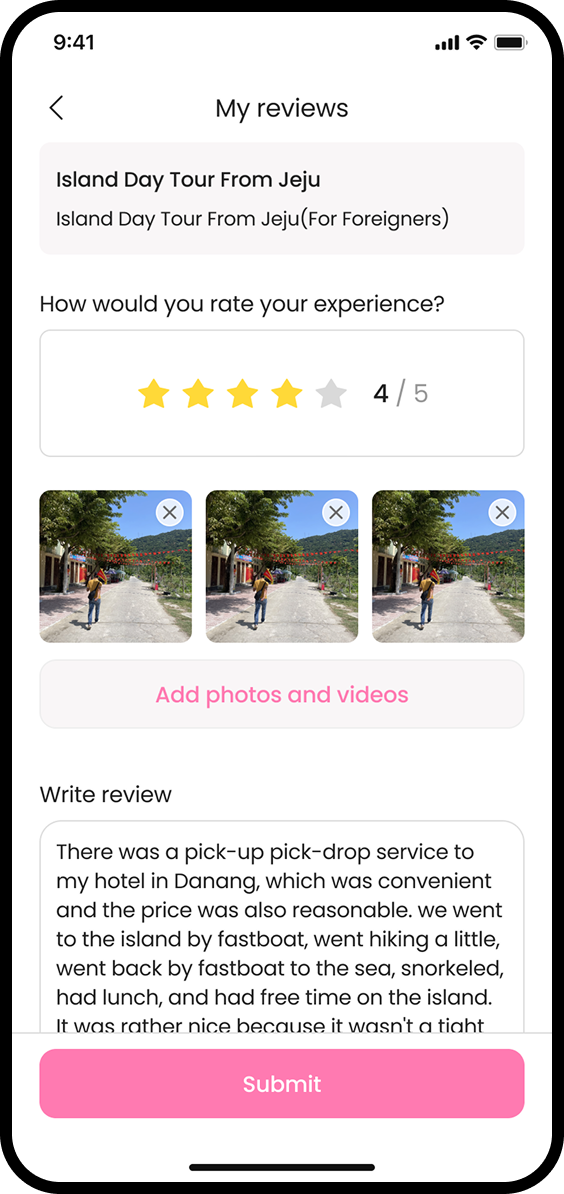
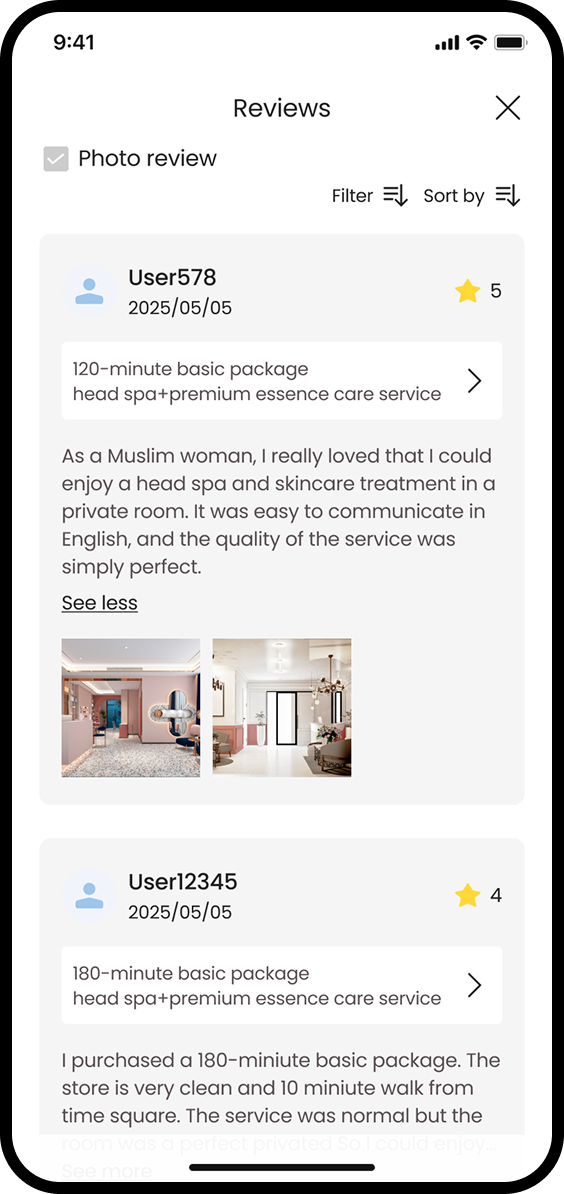
Verified reviews from travelers with similar backgrounds played an important role in helping users decide based on relatable experiences.
Results
This project focused on validating demand and problem–solution fit prior to large-scale user traffic.
✅ Initial interest validation
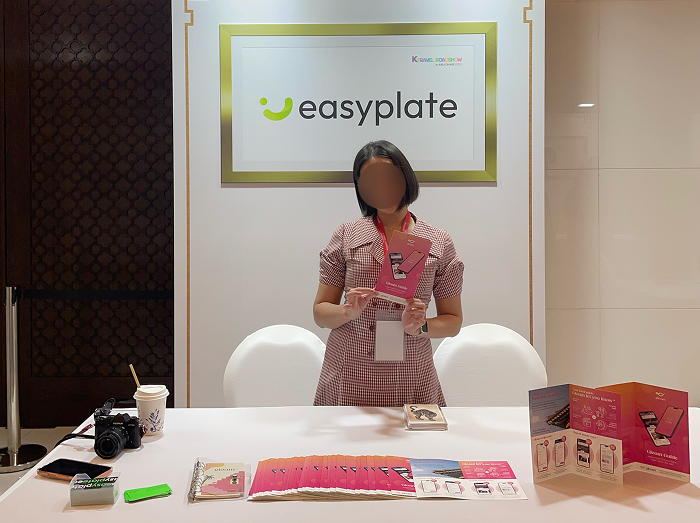
→ During the Abu Dhabi tourism roadshow, landing page visits increased by 320%, and all 200 distributed flyers were claimed, indicating strong interest from the target audience.
✅ Pre-launch demand validation
→ 20 users registered before official release, confirming early demand and alignment with the product direction.
✅ Core feature validation
→ Through internal testing and the pre-launch user pool, three filters were identified as most critical for booking decisions:
- Private rooms
- Female staff only
- English support
At this stage, the results validate user needs and assumptions rather than actual usage metrics or conversion performance.
Reflection & Next Steps
At the early stage, I prioritized a simple and accessible UX over feature expansion, focusing on whether global travelers could smoothly enter and navigate the product.
So far, testing has been limited to internal and development-team validation, focusing on stability, bugs, and intended user flows. Real user behavior and usability feedback have not yet been collected.
With this limitation in mind, the next step is a limited release to gather real user feedback and iteratively improve the booking, payment, and curation experience.
Gloam aims to grow through continuous validation based on real user behavior rather than assumptions.