Trust Architecture
Designing Cultural Trust Signals Through Information Structure
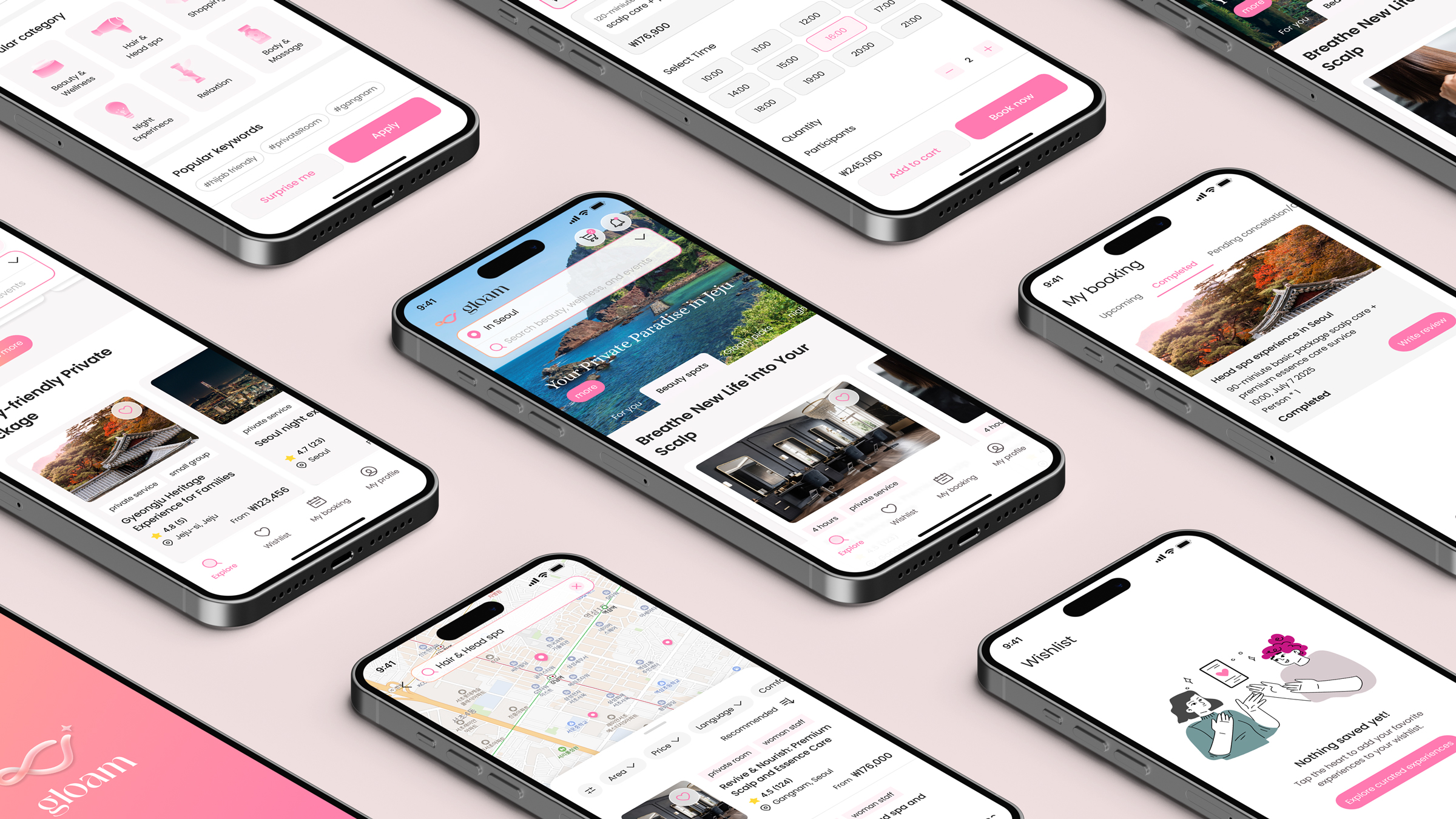
Problem Framing
Low booking conversion was not solely caused by functional issues.
MENA female travelers showed strong interest in Korean beauty services, but hesitated due to uncertainty around safety, privacy, and cultural respect.
The problem was not feature absence, but the absence of structured trust formation.
Research Insights
• Privacy-related attributes (women-only, private room, English support) were key decision factors.
• Users repeatedly cross-checked information via social media to validate trust.
Trust was part of the search experience, not the payment stage.
Hypothesis
If culturally relevant trust signals are introduced at the exploration stage rather than at the final booking stage, users will feel confident earlier in the decision process.
Design Strategy
Instead of generic sorting options, culturally sensitive filters were placed prominently:
• Women-only
• Private room
• English support
...
These filters functioned as trust signals rather than optional attributes.
These insights directly shaped the product foundation:
• Frictionless onboarding (no KR phone required)
• Culturally aware discovery (privacy-focused filters)
• Verified provider system (trust signals)
uxflow2.png)
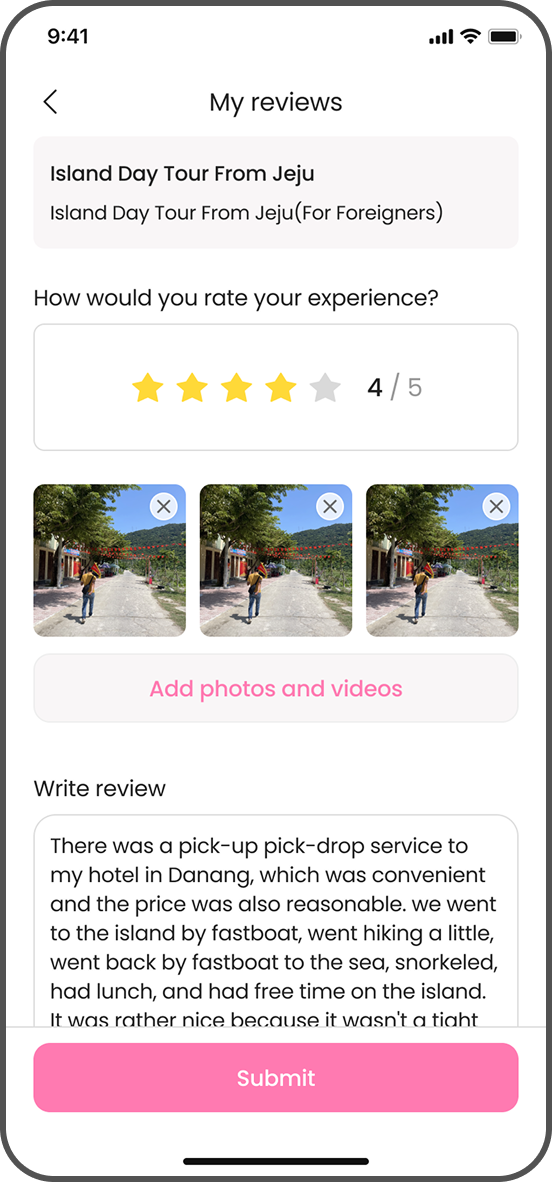
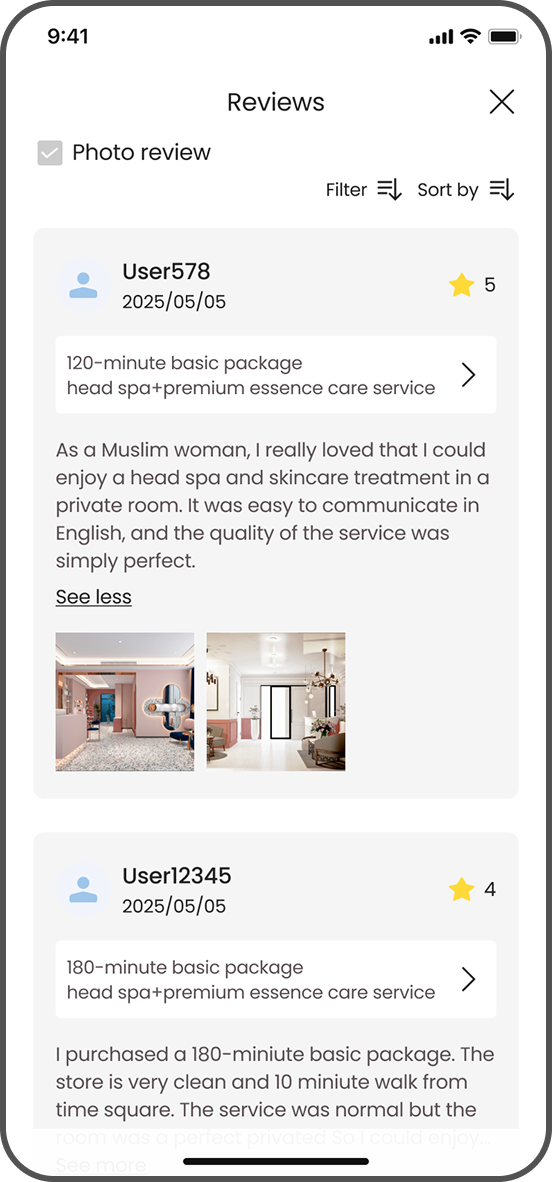
Reviews were structured to help users quickly identify experiences from culturally similar travelers.
The goal was not more information, but contextual reassurance.


Reflection
Through this project, I learned that trust can be designed through information architecture rather than visual decoration.
Future iterations would involve identifying which trust signals most directly impact conversion through behavioral data analysis.