From assumption to validated insight
Conversion Validation Case
thumb.png)
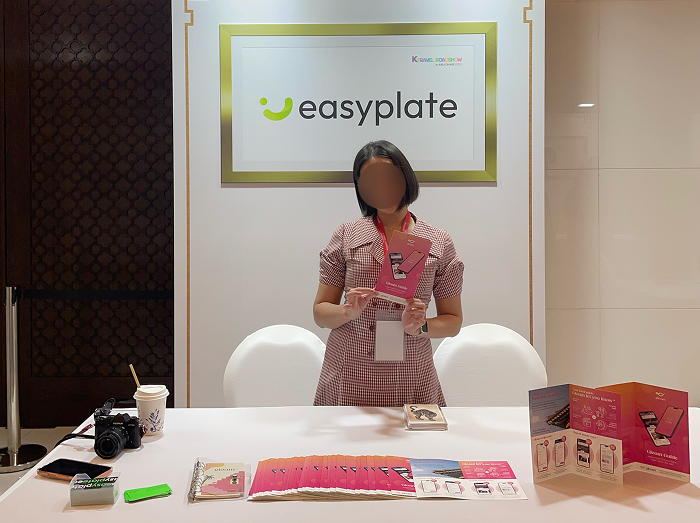
Validated the MVP with target users at a global tourism event in Abu Dhabi
Survey results (target 20)
Average booking confidence score 7.9
Average booking intention score 8.75
Potential users
Built an early user pool of 140 potential users prior to launch
Context & Problem Definition
Although the number of MENA female travelers was rapidly increasing, the actual booking conversion rate remained low. I defined this problem not as a “lack of interest,” but as a failure in designing trust at the booking stage.
“What does a first-time overseas user need in order to feel enough trust to actually complete a booking through this app?”
context.png)
Korean phone number verification
“I tried to sign up, but I couldn’t because I don’t have a Korean phone number.”
Cultural uncertainty
“I’m not even sure whether the staff is female or not.”
Lack of provider trust
“I wanted to book, but I wasn’t sure which places were safe.”
Key barriers
overview.png)
My Role
With no internal developers, I led the project through an external agency, aligning scope and decisions within tight timelines.
Selecting with the External Development Agency
- Translated business hypotheses into clear specifications and narrowed features to those directly validating booking conversion, finalizing scope with the agency PM.
Defining the Feature Scope
- Led the project by removing features rather than adding more
Schedule Coordination & Risk Management
- Reprioritized high-complexity features
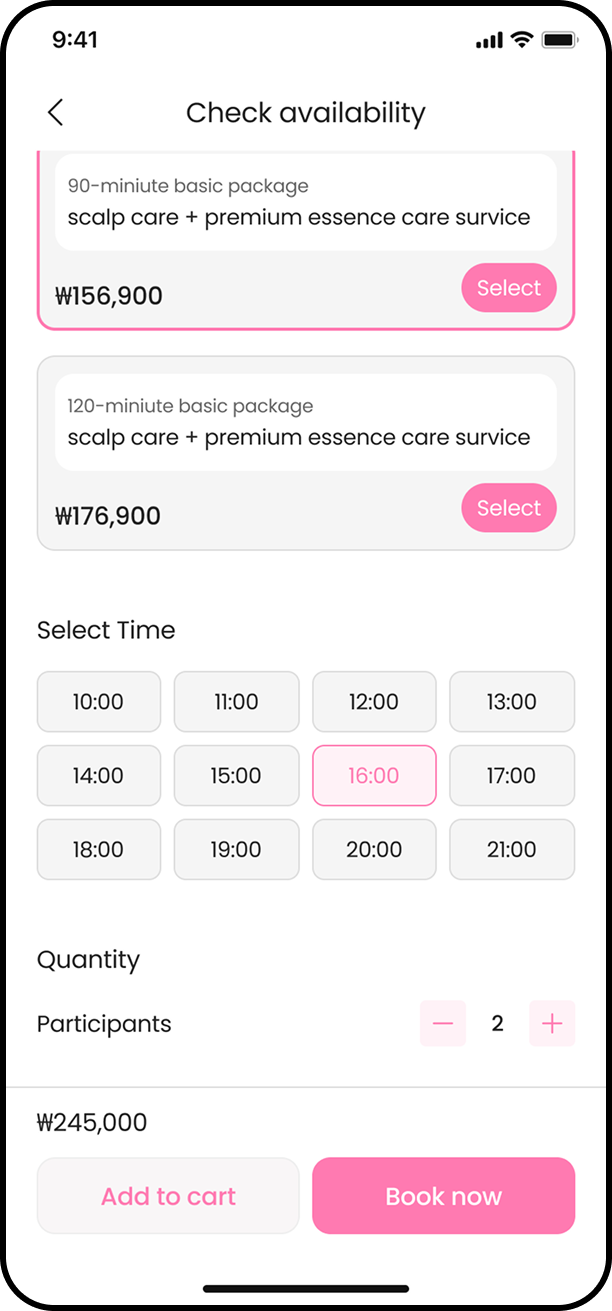
- Prioritized the completion and quality of the core flow (Search → Detail → Booking → Payment)
Research Insights - 1
Through surveys and on-site interviews with Muslim women, I confirmed the following: Research was not simply about extracting insights, but about collecting evidence to reshape the product structure.
Insight 1
Insight
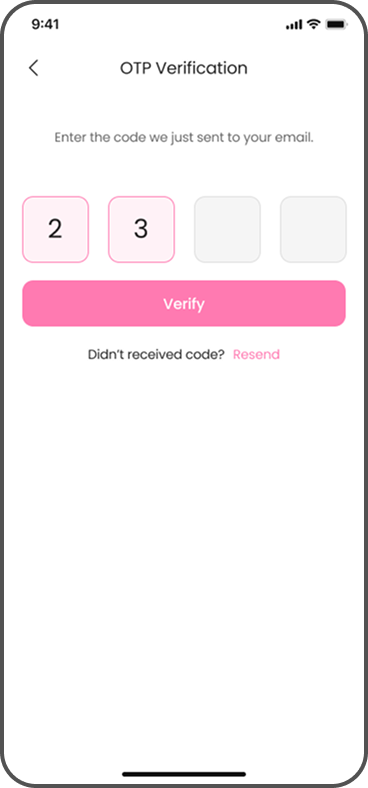
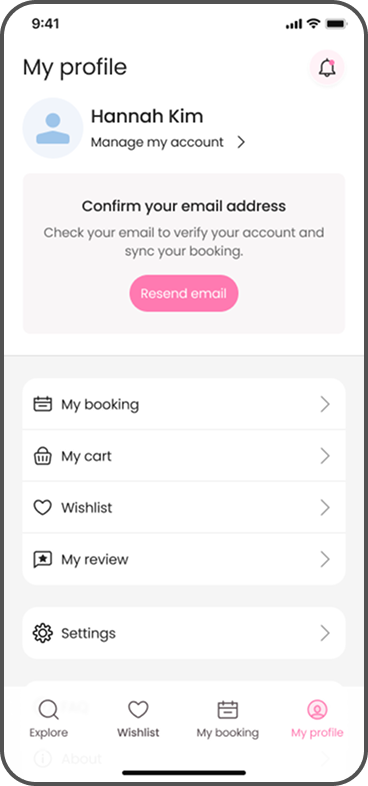
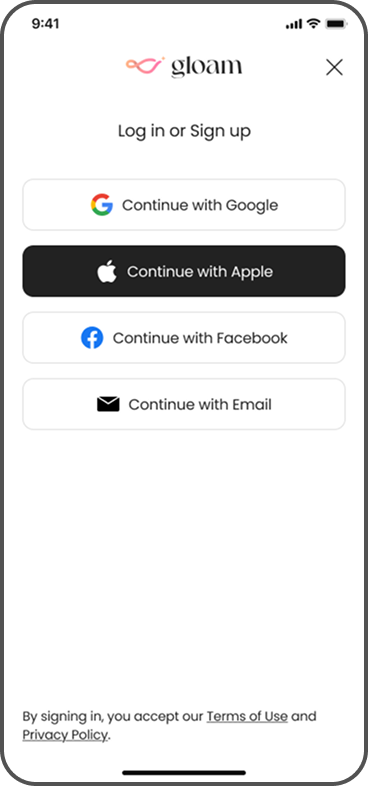
Korean phone verification is not just “inconvenient,” but a major drop-off point.

Product Direction
Redesigned the sign-up process and minimized verification requirements before booking.
uxflow1-1.png)
Insight 2
Insight
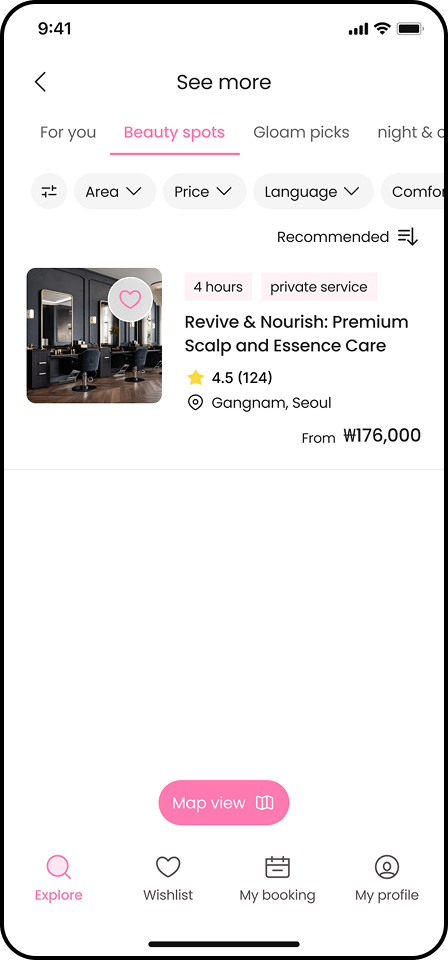
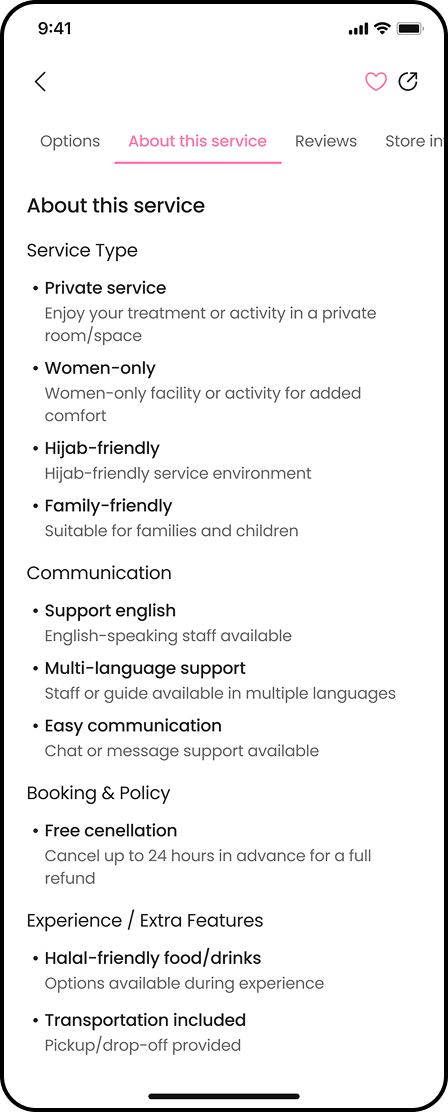
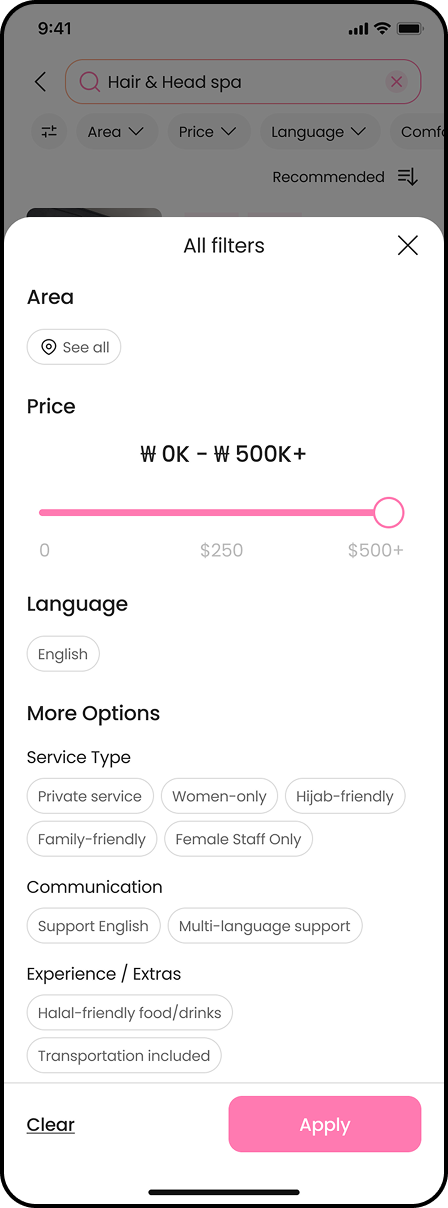
MENA women are highly sensitive to privacy-related factors.
Product Direction
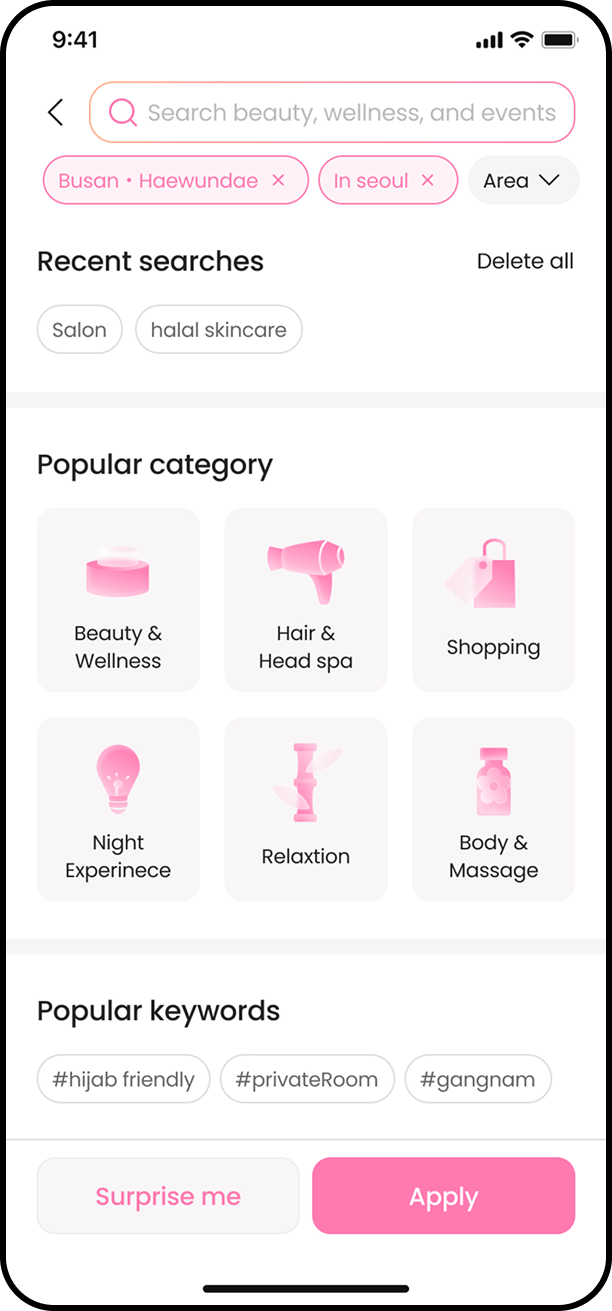
Positioned filters such as “private room” and “women-only” prominently at the search stage.
Insight 3
Insight
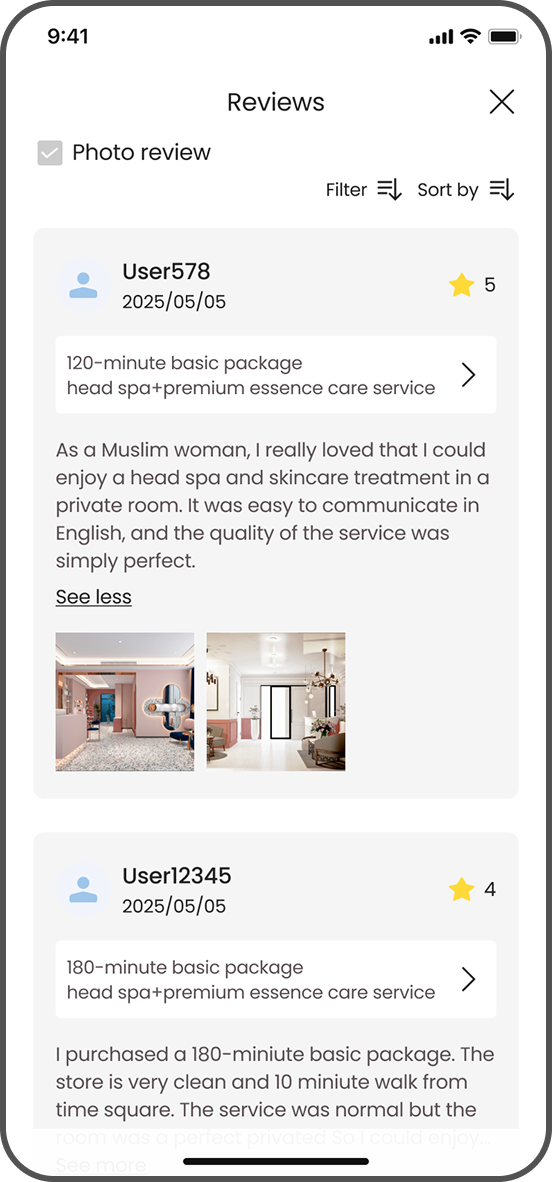
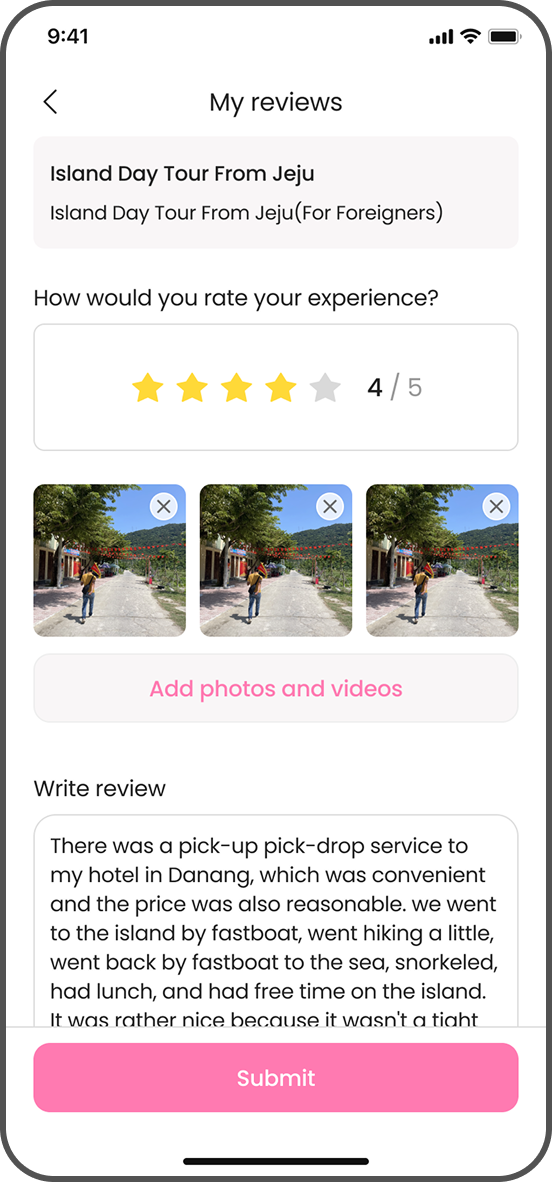
Reviews from travelers with similar cultural backgrounds build trust.
Product Direction
Structured the review system to emphasize cultural context.


Product Hypothesis
The MVP was designed to validate this hypothesis.
These insights directly shaped the product foundation:
• Frictionless onboarding (no KR phone required)
• Culturally aware discovery (privacy-focused filters)
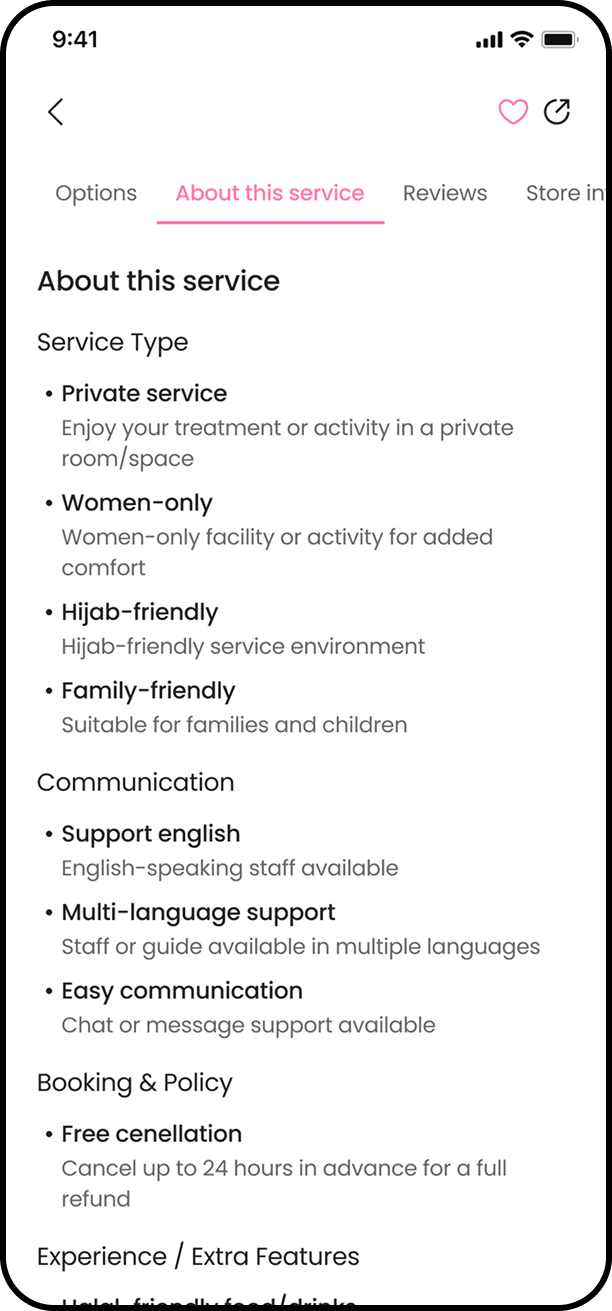
• Verified provider system (trust signals)
“If structural barriers are removed and culturally relevant trust signals are provided, booking trust will increase.”
MVP Strategy
The core goal of the MVP was singular:To validate whether the booking and payment flow could build trust and lead to actual usage intent.
These insights directly shaped the product foundation:
• Frictionless onboarding (no KR phone required)
• Culturally aware discovery (privacy-focused filters)
• Verified provider system (trust signals)
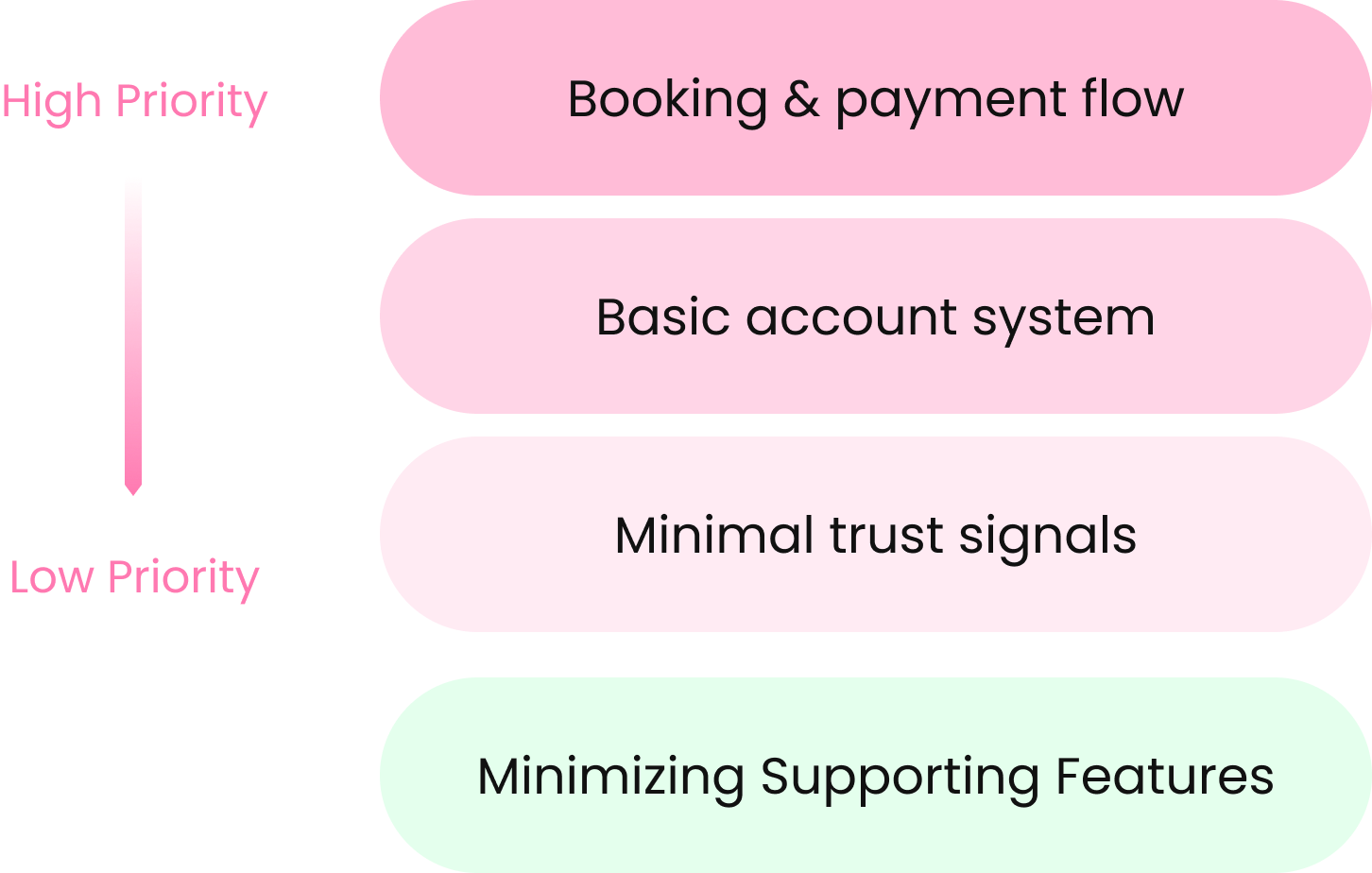
I eliminated non-essential features and refined the scope within technical and budget constraints.
Feature Simplification Decisions
The most critical role in this project was deciding “what not to build,” rather than what to build.
Original idea
In-app messaging
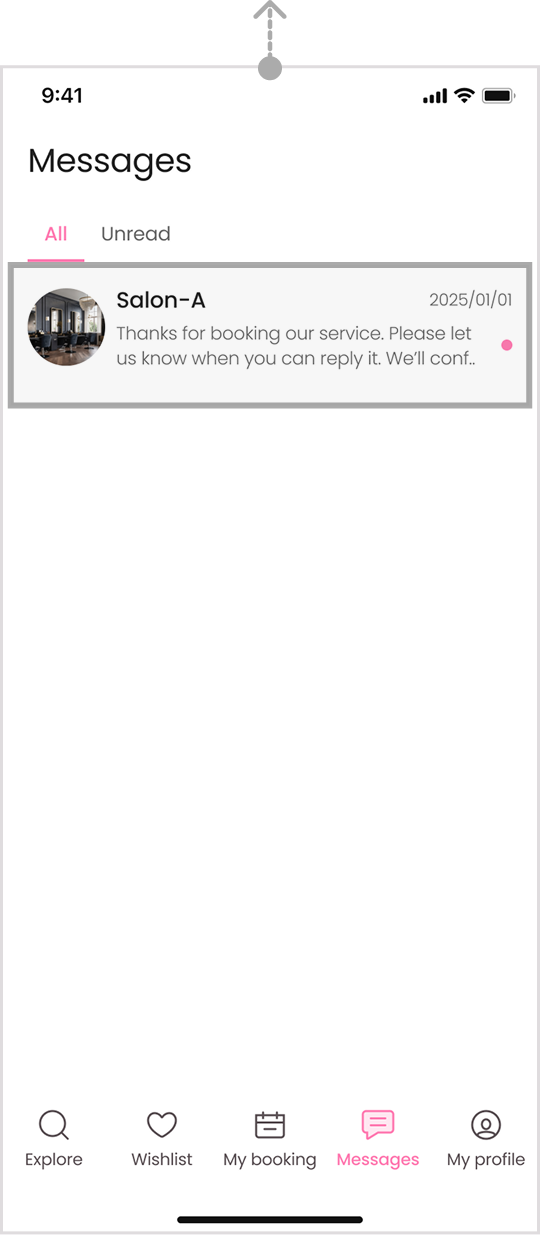
Original Concept
MVP decision
External WhatsApp link
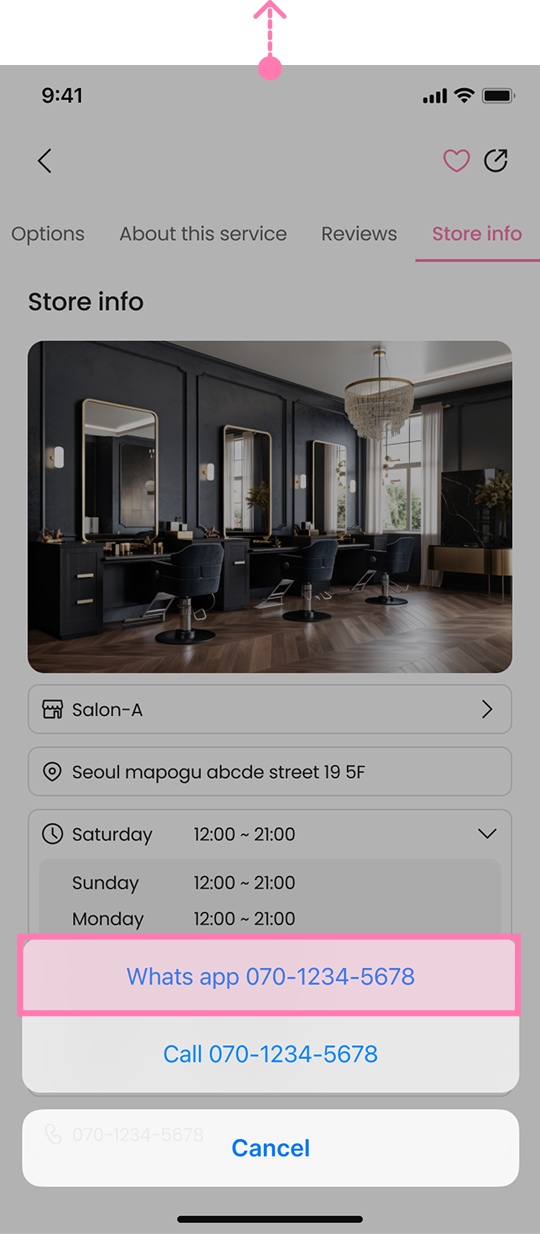
MVP Implementation
Reason
Focus on validating booking flow instead of building a chat system
Original idea
Multi layer rating structure

Original Concept
MVP decision
Single satisfaction score

MVP Implementation
Reason
Prioritize validating booking confidence over detailed scoring
Original idea
Store-specific policies
Original Concept
MVP decision
Unified refund policy

MVP Implementation
Reason
Reduce early-stage operational risk
Solution Framework
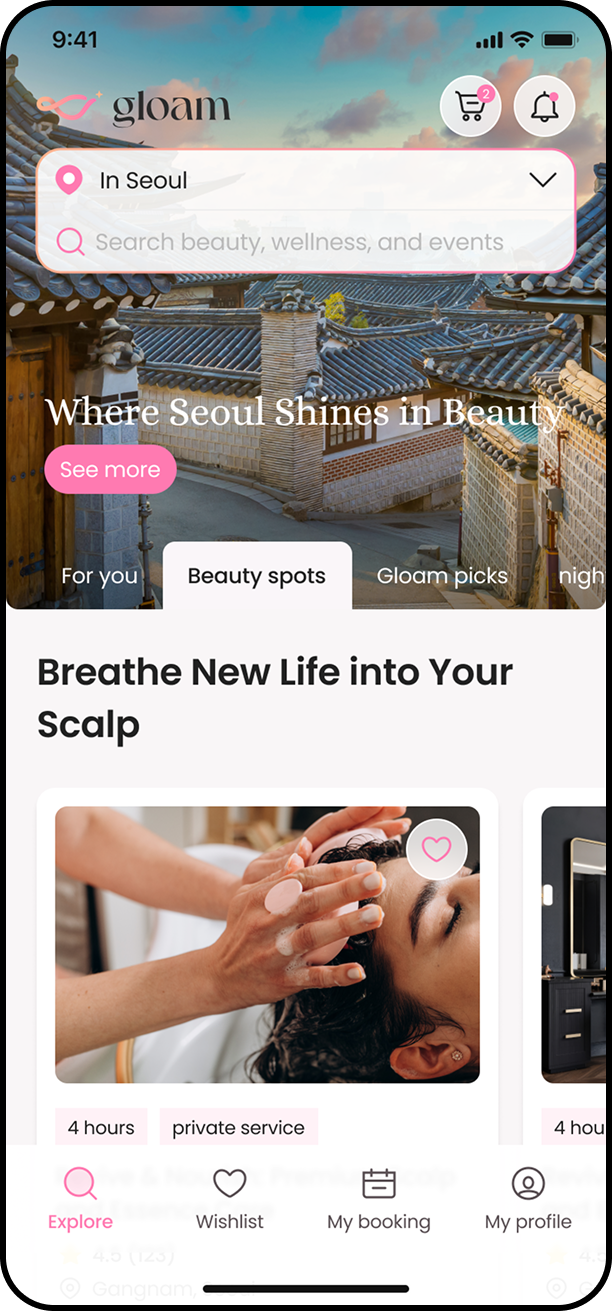
I designed the entire flow from trust formation → evaluation → payment conversion.
framework2.png)
This high-level flow reflects how research insights were translated into a clear, end-to-end booking experience.



Validation Results
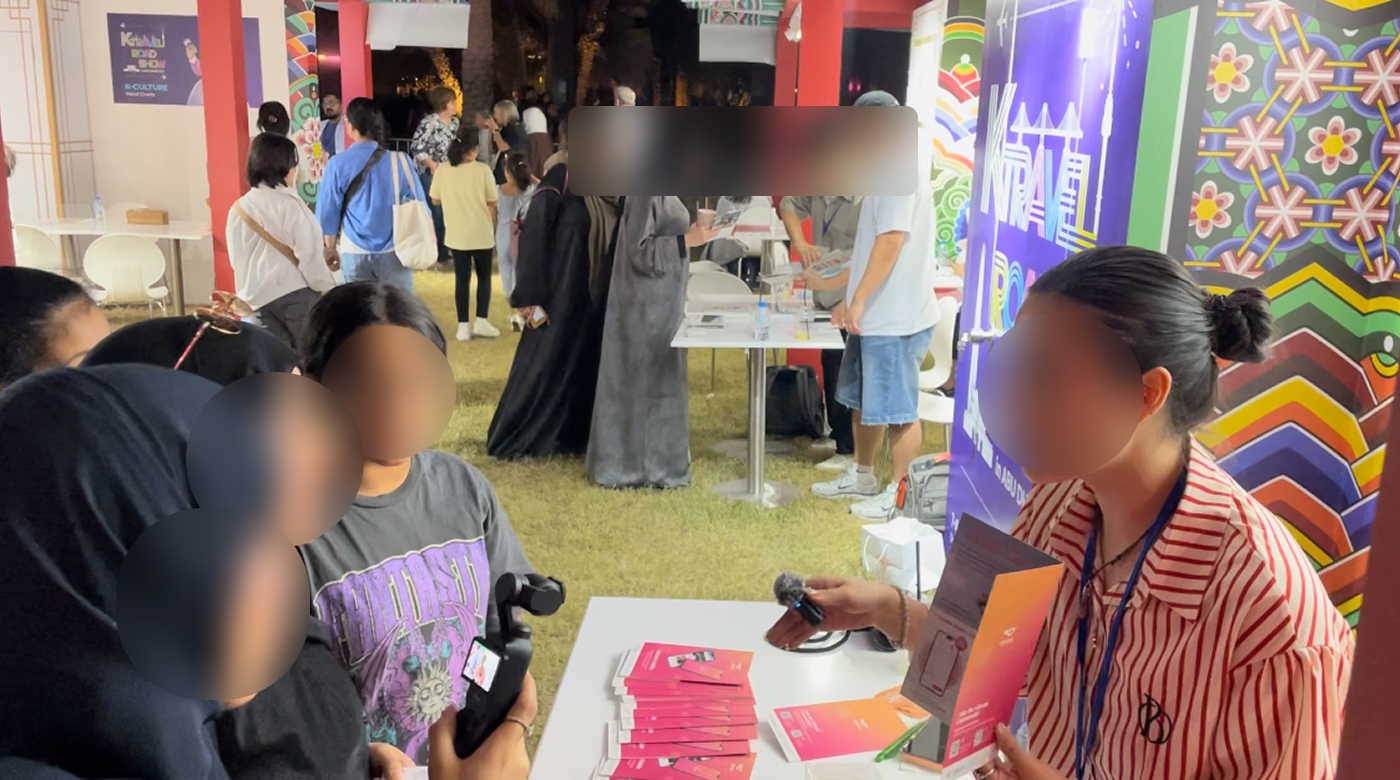
At the Abu Dhabi Global Roadshow, We conducted on-site validation by directly presenting the prototype to target users.Rather than relying on surveys alone, users experienced the actual app flow before providing feedback.
During the event, We also collected 140 emails from potential users.
insight3.png)
Q. Based on what you see, how confident would you feel booking a beauty or wellness service through this app?
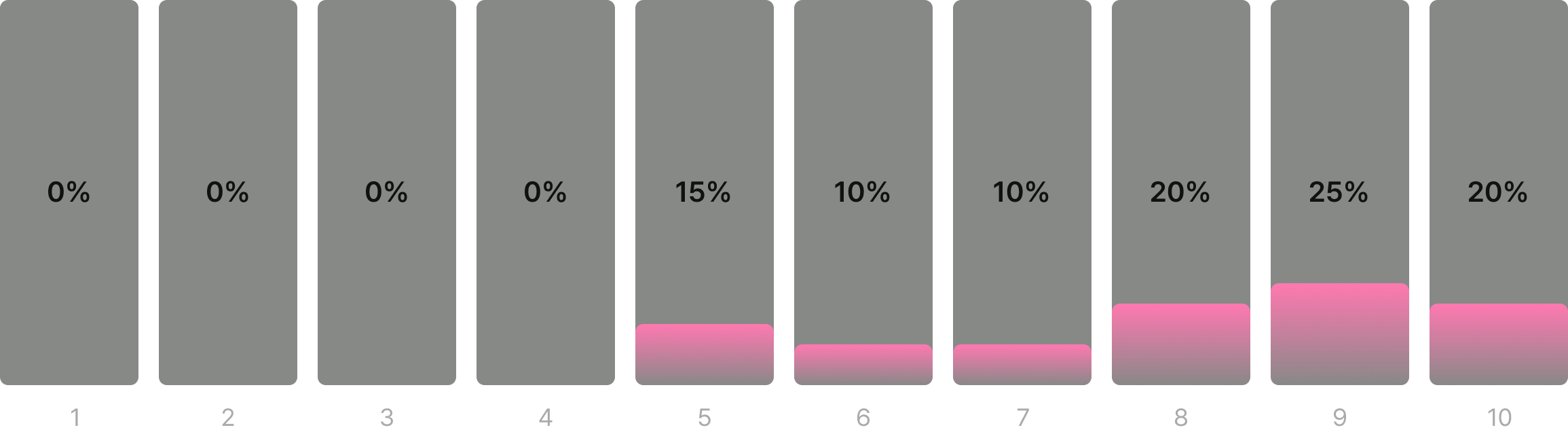
Average Booking Confidence score
7.9
Q. If this service matched your needs, how likely would you be to book it?
Average Booking Intent score
8.75
This indicates that while there is clear demand for the concept, increasing user confidence at the point of booking remains a key challenge.
Among users who experienced the prototype, a common piece of feedback was that the search flow felt somewhat complex.
Brand Identity
Visual Tone & Trust Signals
Within the boundaries of usability and trust, I established a visual tone that feels familiar, refined, and appropriate for a beauty platform.
The logo and color system were used as supportive signals that reinforce consistency and brand identity without interrupting core UX flows.
identity.png)
Iteration plan
Exploration fatigue was identified during interviews, leading to a hypothesis for improving the entry experience.I proposed an A/B testing structure for post-launch validation:
Hypothesis
If cultural filters are elevated from keyword level to category level, target users will recognize the service identity faster and enter detail pages more quickly.
Risk Hypothesis
Removing general categories (e.g., Shopping, Relaxation) may make the experience feel limited for users exploring broader beauty and wellness options.
Key Metrics
• Time to first detail page
• Filter usage rate
• Booking start rate
• Session drop-off rate

A (Current UI)
Content organized by popular categoriesFilters and regions presented as keyword-based options

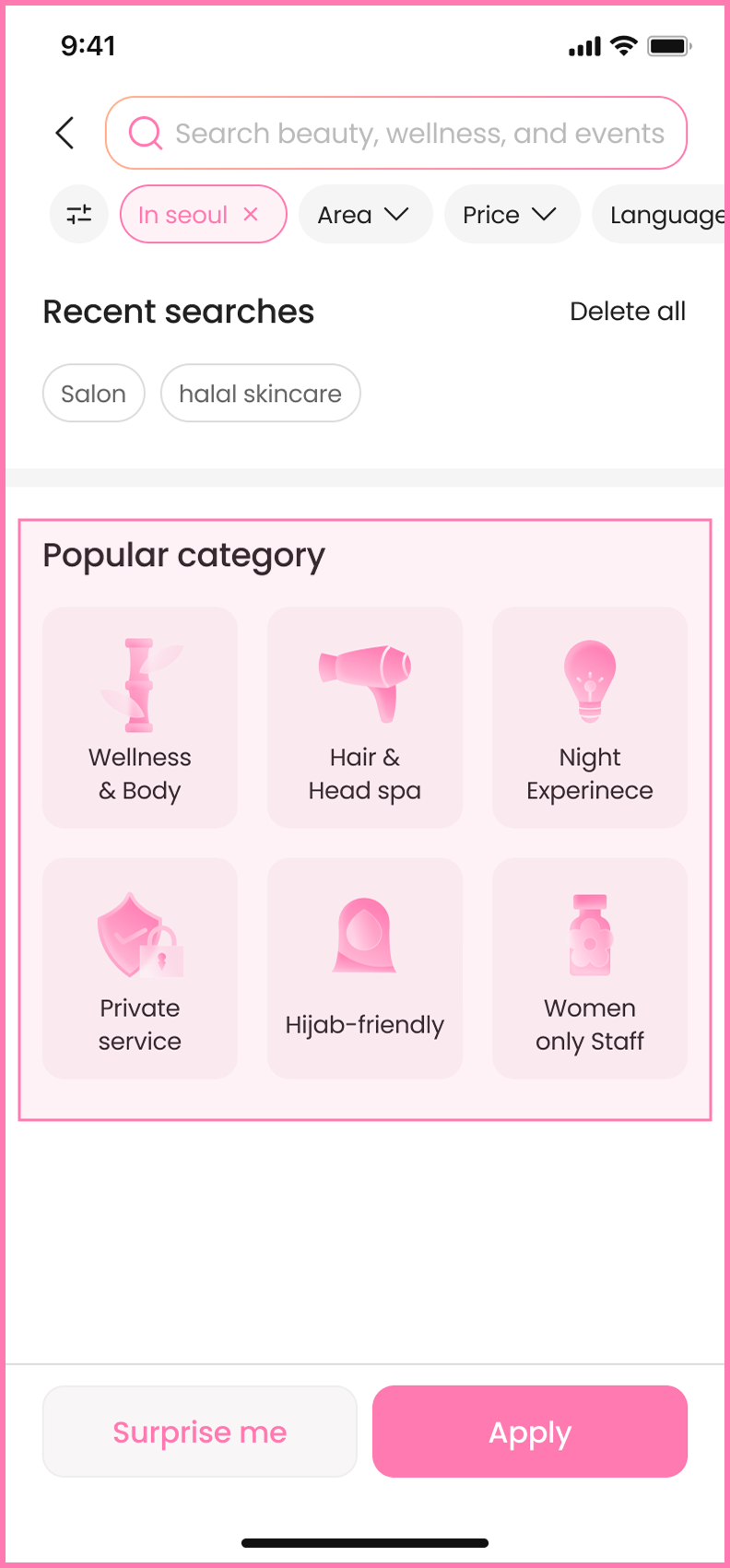
B (Improved UI)
Cultural filters elevated to category levelImproved accessibility to relevant services
Design system
To ensure consistency across user, store admin, and operator interfaces, I built a lightweight component-based design system.
• Standardized color tokens
• Reusable form components
• Booking-state UI patterns
This allowed faster iteration within MVP constraints and reduced implementation ambiguity with the external development team.
design-sysyem.png)

more.png)
The attached video demonstrates how these components were applied consistently in real design workflows, helping reduce maintenance costs and enabling future expansion into categories beyond beauty while maintaining brand coherence.
My role
Product decision-making
Defined core user flows based on research and simplified the structure by selecting only essential MVP features
External collaboration
Translated product requirements and user flows into development specifications, working closely with an external development team to align design intent with implementation
Prioritization & risk management
Reorganized development priorities around user flows and reduced structural risks through early prototype validation
Design system
Reorganized development priorities around user flows and reduced structural risks through early prototype validation
Post-Launch Plan
Post-launch, I plan to test filter-based exploration against an icon-driven simplified list to identify which structure drives higher conversion.
Core Metrics
- Search → Detail page entry rate
- Detail → Booking start rate
- Booking completion rate
- Filter usage rate
Primary Hypothesis
- A culturally detailed filter structure will contribute to trust formation and increase booking intent
Risk Hypothesis
- During research, some users experienced exploration fatigue at the filtering stage
Experiment Design
Option A
- Maintain the existing filter-based search structure
Option B
- Provide cultural category icons as the first entry point, with automatic filtering applied upon icon selection
Key comparison metrics:
- Time to first detail page entry
- Filter usage rate
- Booking start rate
Outcomes
The most significant takeaway from this project was the ability to determine what to validate first in an uncertain market.
Early demand validation
- Landing page visits increased by 320% during the Abu Dhabi tourism roadshow.All 200
- prepared flyers were distributed, confirming strong interest from the target audience.
Defining the Feature Scope
- Collected email sign-ups from 140 local users prior to launch, indicating early interest and serving as a distribution channel for launch announcements and future updates.
Schedule Coordination & Risk Management
- Identified the three most influential booking filters private rooms, women-only services, and English support